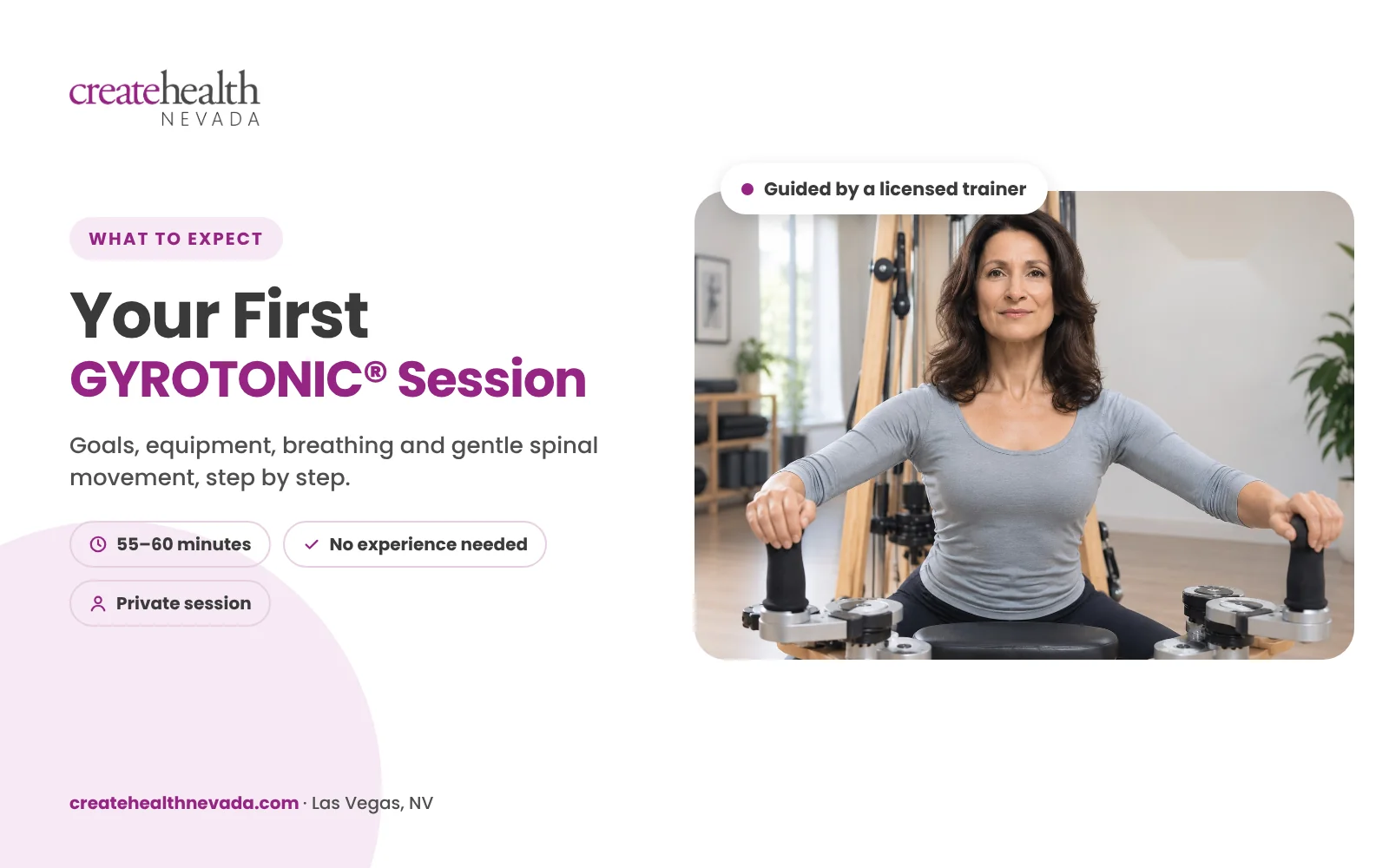
In your first GYROTONIC® session, a trainer will ask about your goals, explain the equipment, and guide you through slow, flowing movements. Most private sessions last about 55–60 minutes and focus on breathing, spinal movement, and flexibility. You don’t need previous experience, and movements can be adjusted to your ability. Learn what your first session involves, how to prepare, and what to expect from start to finish.
What Is the GYROTONIC® Method?
The GYROTONIC® Method is an exercise system that uses special equipment to help you move your body through circles, arcs, and spirals. Unlike exercises that focus on moving back and forth, it allows your body to move in several directions.
The method was created by Juliu Horvath, a former professional dancer. It combines movement ideas from dance, swimming, yoga, tai chi, and gymnastics.
The GYROTONIC® Method is part of the GYROTONIC EXPANSION SYSTEM®, which also includes GYROKINESIS®. The main difference is the equipment: GYROTONIC® uses specialized machines, while GYROKINESIS® exercises are typically done on a stool and mat.
Before Your First Session
What to Wear
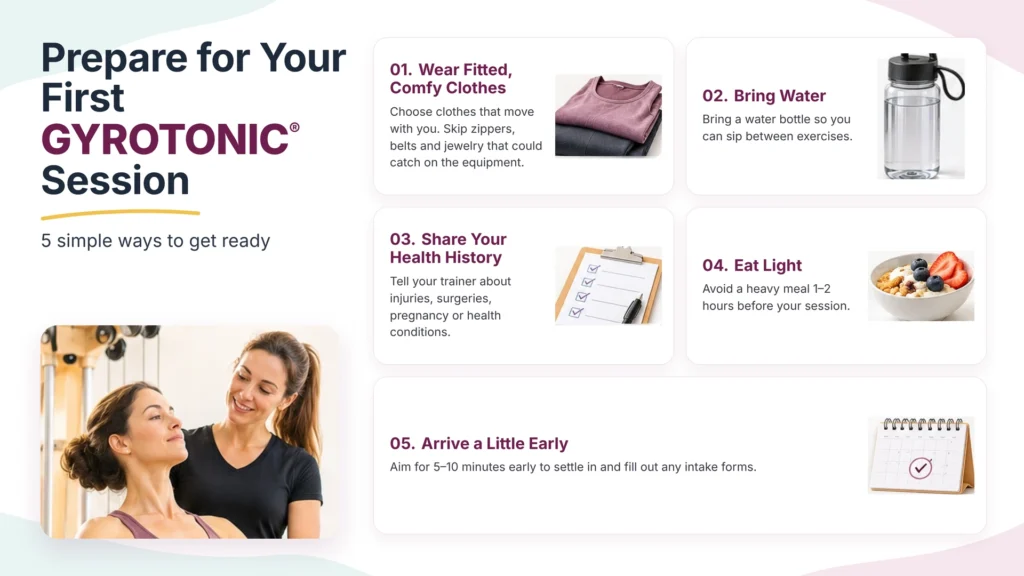
Wear comfortable clothes that let you move freely, such as leggings, fitted athletic pants, and a T-shirt. Avoid very loose clothing so your trainer can see how your body moves. Check whether your studio prefers bare feet or grip socks.
What to Bring
- A water bottle
- Details about any past injuries, surgeries, or health conditions
- Questions you want to ask your trainer
Eat Light
If you’re hungry, have a light snack an hour or two before your session. Avoid a large meal right before, as bending and twisting may feel uncomfortable.
Arrive a Few Minutes Early
Try to arrive 5–10 minutes early. This gives you time to fill out any forms, settle in, and ask questions before you begin.
What Happens During Your First GYROTONIC® Session?
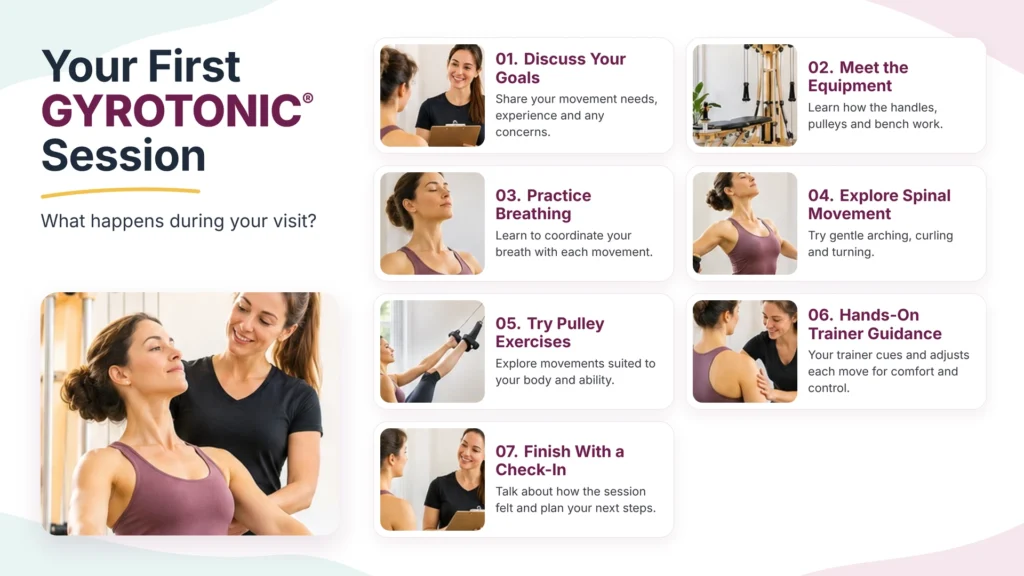
Your first session usually follows these seven steps. The exact exercises and order may vary based on your goals, comfort, and the equipment available.
1. You’ll Talk About Your Goals and Health History
Your trainer will start by asking about:
- Past or current injuries, pain, or surgeries
- Health conditions that may affect your movement
- Your activity level and exercise experience
- What you’d like to improve, such as posture, strength, or flexibility
Your answers help the trainer choose suitable exercises and adjust the equipment. It’s fine if you’re not sure what you want to improve yet. Simply explain what you’d like to work on.
2. You’ll Get Familiar With the Equipment
You’ll likely use the Pulley Tower Combination Unit, which has two main parts:
- Handle unit: A bench with rotating handles that you move while seated.
- Pulley tower: A system of adjustable weights, cables, and straps that provides resistance as you move.
Your trainer will show you how each part works and adjust the equipment to your body. You won’t need to operate it on your own.
3. You’ll Practice Breathing With Movement
Your trainer will show you how to match your breathing with each exercise.
For example, your trainer may ask you to inhale while lifting your chest, then exhale as you gently round your back. The goal is to move and breathe together without holding your breath.
You don’t need to memorize the breathing patterns. Your trainer will guide you as you practice.
4. You’ll Begin With Spinal Movements
Many sessions begin with seated exercises using the rotating handles. You may practice:
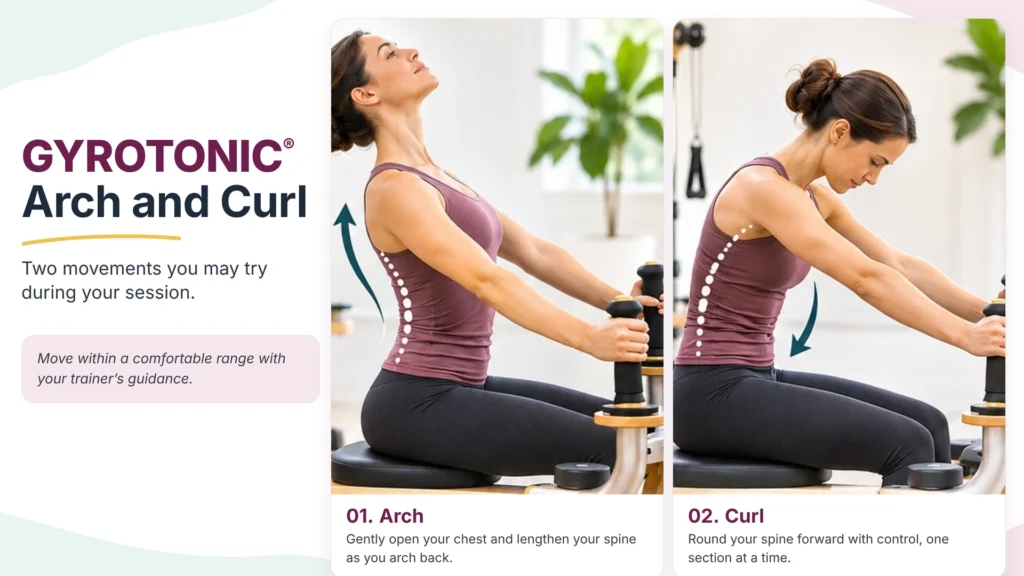
- Arching: Gently opening your chest and extending your back
- Curling: Rounding your spine forward
- Twisting: Turning your upper body from side to side
- Side bending: Leaning gently to the left and right
One common starting exercise is called arch and curl. It helps you explore how your spine moves while your arms follow the handles.
Your trainer will help you find a comfortable range of motion without forcing a stretch.
5. You May Try Exercises on the Pulley Tower
Depending on your goals and comfort, your trainer may introduce exercises such as:
- Leg movements: Lying on your back with your feet in straps and moving your legs through circles
- Arm movements: Using the pulleys for reaching and stretching exercises
- Standing exercises: Practicing controlled movements while using the equipment for resistance
You may not try every exercise during your first visit. Your trainer will choose movements that match your needs.
6. You’ll Receive Guidance Throughout
Your trainer will watch how you move and offer simple instructions, such as relaxing your shoulders or adjusting your position.
They may also offer light, hands-on guidance to help with alignment. You can ask for verbal instructions instead if you prefer not to be touched.
If an exercise causes pain or doesn’t feel right, let your trainer know. They can change the exercise or help you stop safely.
7. You’ll Finish With a Short Check-In
At the end of your session, your trainer may ask how the exercises felt and whether anything was difficult.
They can also suggest which movements to focus on in future sessions and how often you might practice based on your goals.
How Will You Feel After Your First Session?
You may feel more relaxed, flexible, or aware of how your body moves after your first GYROTONIC® session. Some people notice less stiffness in their back or hips, while others feel like they’ve had a gentle workout. Everyone’s experience is different.
You might also feel mild muscle soreness the next day, especially if you tried movements that were new to you. Gentle activity and rest may help. If the soreness is severe or doesn’t improve, seek medical advice.
The exercises may feel unfamiliar at first. As you attend more sessions, you can become more comfortable with the equipment and learn to move with better control.
Is the GYROTONIC® Method Right for Me?
The GYROTONIC® Method can work for people of different ages, fitness levels, and movement goals, including:
- Beginners who are new to exercise
- Older adults looking for low-impact exercise
- Dancers, golfers, runners, and other athletes
- Office workers who feel stiff after sitting for long hours
- People returning to exercise after an injury, with approval from their doctor or physical therapist
Your trainer can adjust the exercises and resistance based on your strength, comfort, and experience.
A note on safety: If you have ongoing pain, a health condition, or recent surgery, ask your doctor whether this type of exercise is safe for you. GYROTONIC® exercise does not replace medical treatment.
Things to Know Before You Start
Before booking your first GYROTONIC® session, here are a few things worth knowing:
- Private sessions may cost more. One-on-one training often costs more than group fitness classes. Check the price and session length before booking.
- Check your trainer’s qualifications. Look for a licensed GYROTONIC® Trainer and ask about their experience working with beginners.
- Equipment isn’t available everywhere. Not every fitness studio offers the GYROTONIC® Method. Look for a studio with the right equipment and a qualified trainer.
Can You Do GYROTONIC® at Home?
The GYROTONIC® Method uses special equipment, so practicing at home isn’t as simple as following a regular workout video. The Pulley Tower takes up space, and beginners should learn how to use it safely with a qualified trainer.
If you prefer exercises that don’t need large machines, the GYROKINESIS® Method may be a better choice. It uses a stool and mat for guided movement exercises.
You can also visit the official GYROTONIC® website to learn more about the methods and available training options.
GYROTONIC® vs. Pilates: What’s the Difference?
Both GYROTONIC® and Pilates help you build strength, improve flexibility, and move with better control. The main difference is how you move and the equipment you use.
| GYROTONIC® Method | Pilates | |
| Creator | Juliu Horvath | Joseph Pilates |
| Resistance | Pulleys and weights | Springs |
| Movement style | Circular, spiraling, flowing | Mostly straight-line, controlled |
| Main focus | Spine moving in all directions, breath, flow | Core strength, alignment, control |
| Typical format | Mostly private sessions | Private and group classes |
Which should you choose? Try GYROTONIC® if you enjoy flowing, full-body movements. Pilates may be a better fit if you prefer structured exercises that focus on strength and control. Both can work for beginners.
At Create Health Nevada, we also offer Private Pilates sessions, so you can explore both methods and find what works for you.
GYROTONIC® vs. GYROKINESIS®: Private Equipment or Group Class?
Both methods use similar movement ideas, but the experience is different.
- Choose GYROTONIC® if you want equipment-based exercises with adjustable resistance and personal guidance from a trainer.
- Choose GYROKINESIS® if you prefer exercises without large machines or want movements you can practice at home after learning them.
GYROTONIC® sessions are often private, while GYROKINESIS® is commonly taught in groups. However, both methods can be taught one-on-one.
If you’re unsure which one suits you, ask a qualified trainer about your goals before booking.
Book Your First Session
Ready to try the GYROTONIC® Method? At Create Health Nevada, you can explore a new way to move with guidance from a trainer who works at your pace.
If you’re looking for private GYROTONIC® sessions in Las Vegas, Nevada, schedule your first visit and see if the method is right for you.
Book Your First Session
Frequently Asked Questions
How often should I do GYROTONIC® sessions?
You can start with one or two sessions a week, depending on your schedule and goals. Your trainer can help you decide how often to attend and adjust your plan as you progress.
Is GYROTONIC® a good workout?
Yes. GYROTONIC® exercises use controlled movements and resistance to work different muscle groups. Sessions can help you practice strength, flexibility, balance, and body control. How challenging the workout feels depends on the exercises and resistance your trainer chooses.
Does GYROTONIC® build muscle?
GYROTONIC® exercises use weights and pulleys to challenge your muscles. This can help build strength in areas such as your back, core, hips, and shoulders. However, it may not be the best choice if your main goal is to build large amounts of muscle.