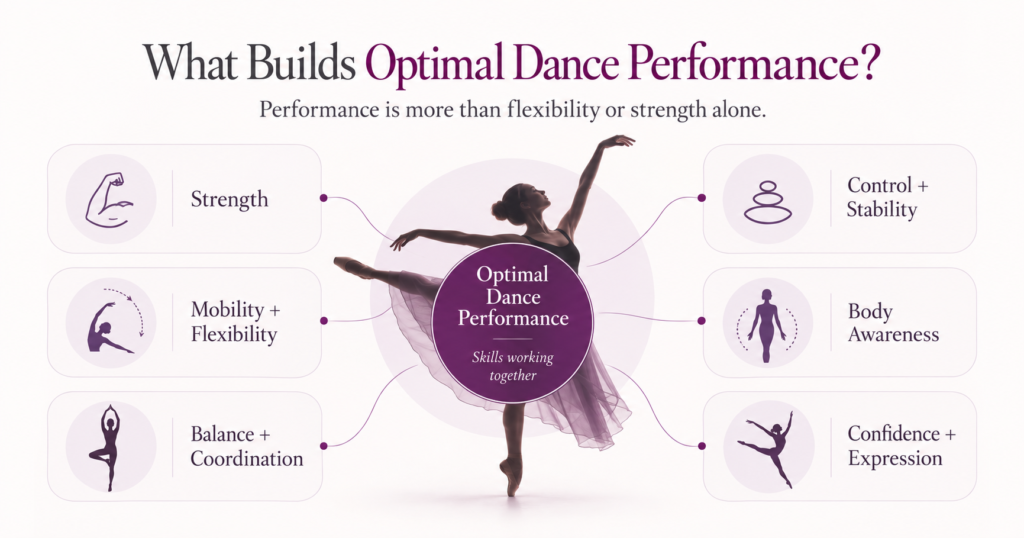
Optimal performance in dance happens when strength, flexibility, balance, control, confidence, and emotional expression come together. It allows movement to feel free, connected, and effortless.
For a dancer, reaching that level can take years of training, stretching, rehearsing, performing, and pushing the body to its limits.
Yet some of the most powerful moments on stage happen when all that effort seems to disappear.
The body feels prepared, the mind becomes quiet, and movement becomes an expression of confidence, emotion, and artistry.
At Create Health Nevada, we help dancers and performers develop greater mobility, strength, body awareness, and movement control. We work with each dancer to address movement patterns, goals, and challenges so they can move with freedom.
Schedule an appointment with Create Health Nevada to strengthen the movement skills and body awareness that support optimal dance performance.
What Does Optimal Performance in Dance Really Mean?
Optimal performance in dance does not look exactly the same for every dancer.
For one person, it may mean greater flexibility. For another, it may mean recovering confidence after an injury. Someone else may need better balance, strength, coordination, mobility, or the ability to perform without excessive tension.
And then there is the artistic side.
Dance is not only a physical skill. It is a way of communicating. Movement can convey emotion, intention, character, passion, and artistry.
Research has found that emotions can affect how dancers move. In one study, dancers who listened to joyful music showed faster pelvic movements and a greater range of motion than when they listened to sad music.
This shows that emotions and movement are closely connected.
For me, optimal performance happens when these different parts of the dancer can work together.
The body is capable, the mind is present, and movement feels connected.
And the dancer has enough freedom to express something beyond technique.
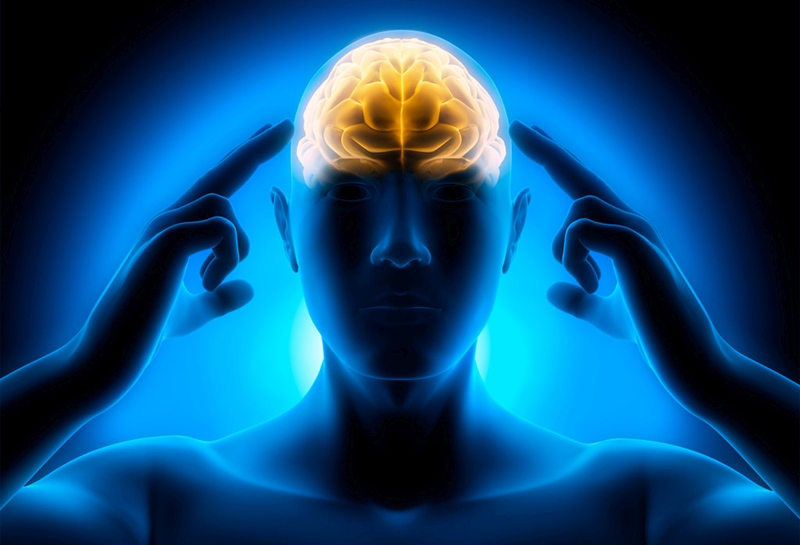
Transcending the Limits You Put on Yourself
Years of professional dance taught us that dancers can push their bodies incredibly far.
Modern, contemporary, jazz, Latin, and lyrical dance all demand strength, flexibility, control, and hours of practice. But sometimes, doing more is not what helps you perform better.
Sometimes, you need to let go.
Think about a dancer trying to lift their leg higher. They may tighten their shoulders, hold their breath, or grip their hips because they think more effort will give them more height. Instead, that extra tension can make the movement harder.
Try the same movement while keeping the body strong but letting the shoulders relax, breathing naturally, and allowing the hip to move freely.
The leg may not suddenly go much higher, but the movement can feel easier, smoother, and more controlled.
That is an important part of optimal performance: knowing when to use strength and when to release tension.
You do not have to push your body harder to move better.
Sometimes, you perform at your best when you stop fighting the movement and give your body the freedom to do what it already knows.
Why Is Body Awareness Important for Dance Performance?
Dancers spend years learning what their bodies should do. But there is another question that matters just as much:
What does your body feel while you are doing it?
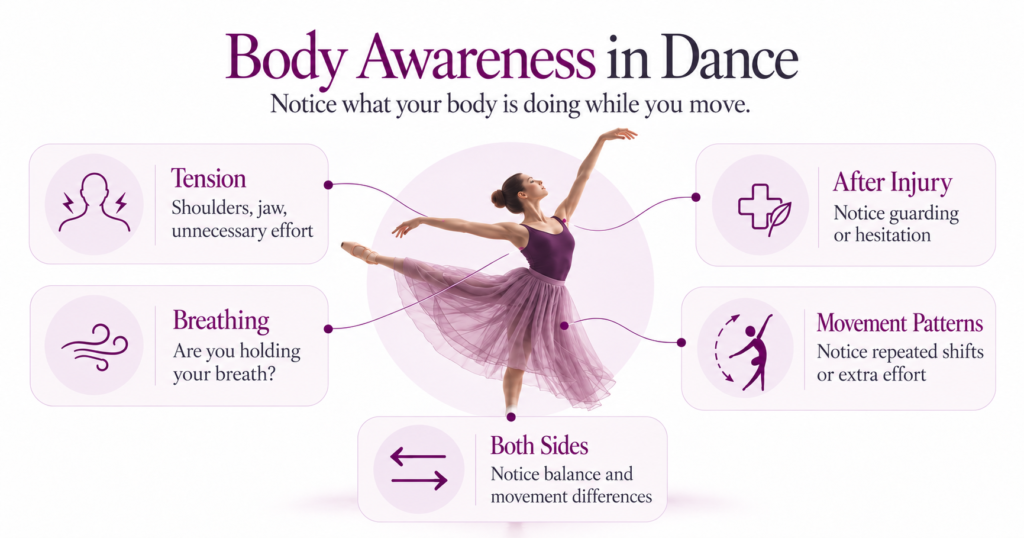
Body awareness helps you notice what is happening in your body while you move. It can help you understand tension, balance, breathing, alignment, mobility, and coordination. This awareness can make it easier to recognize what helps your movement and what may be getting in the way.
Notice Where You Hold Tension
You may tighten your shoulders before a difficult movement or clench your jaw when you concentrate.
You may not even realize you are doing it because you have repeated the pattern so many times.
Noticing that tension gives you a chance to release it and move with less effort.
Pay Attention to Your Breathing
Do you hold your breath when you try a difficult movement?
Breathing can change when you are concentrating, nervous, or trying to control your body. Paying attention to your breath can help you notice when your body is becoming tense.
Instead of forcing the movement, you can pause, breathe, and try again with greater awareness.
Understand How You Use Each Side of Your Body
Dancers often develop favorite sides.
You may always turn one way, balance on the same leg, or feel more comfortable leading with one side.
Over time, your body can start relying more heavily on that side.
Body awareness helps you notice these differences so you can work toward more balanced movement.
Notice Changes After an Injury
An injury can change the way you move even after the pain has improved.
You may hesitate before a movement, protect one side of your body, or avoid putting your full weight through an injured area.
These changes can affect your confidence as well as your movement. Research on dancers has found that injury can affect confidence, self-esteem, identity, and the experience of returning to performance.
Paying attention to how your body moves after an injury can help you recognize these changes and work on them gradually.
Recognize Movement Patterns That Hold You Back
Some movement habits develop so slowly that you stop noticing them.
Maybe you lift one shoulder when you raise your arm. Maybe you shift your weight to one side. Maybe you use extra effort to reach a position that should feel easier.
Body awareness helps you catch these small patterns.
Once you notice them, you can start working on how you move instead of simply pushing through the same pattern.
Personalized Movement for Optimal Dance Performance
Every dancer brings a different body and history to their training.
That is why we believe personalized movement matters.
Some dancers may need to work on mobility. Others may need greater strength or stability. Some may benefit from slowing down and developing greater body awareness. Others may need to rebuild confidence after an injury.
And some may simply be looking for that feeling of freedom they once experienced in performance.
Our work with Pilates, Gyrotonic training, movement rehabilitation, and body awareness is for the individual rather than a one-size-fits-all routine.
As Shirl Andrews described after working with us:
“Each time, upon leaving a Gyrotonic session with her, I am renewed and open, vitalized and ready to move through my day with a grace, ease, and power that I did not have prior.”
That is the experience we want movement to create.
Not simply more exercises. More awareness, connection, and freedom.
Five Ways to Work Toward Optimal Performance in Dance
Optimal performance does not come from one skill.
Dancers need strength, mobility, flexibility, balance, coordination, body awareness, and confidence to work together.
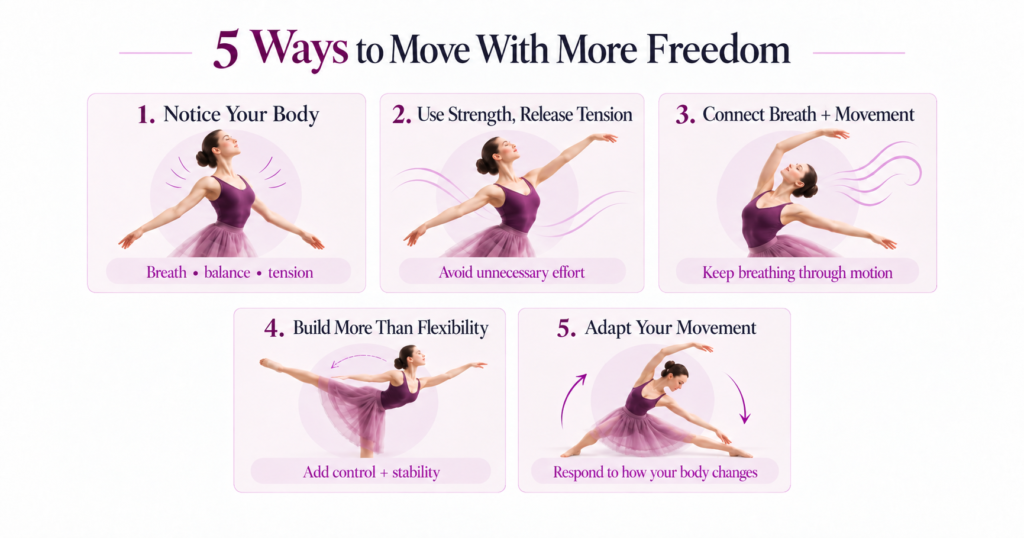
These five practices can help you understand your body and move with greater freedom.
1. Learn to Notice Your Body
Before trying to change a movement, notice what your body is doing.
Pay attention to your breathing, balance, posture, tension, and how you use each side of your body.
For example, before practicing a difficult turn, notice where you feel your weight. Are you standing evenly on both feet? Are your shoulders relaxed? Are you holding your breath? Do you feel more comfortable turning in one direction?
These small details can tell you a lot about your movement.
2. Stop Confusing Tension With Strength
Strength helps you control movement. Tension can sometimes get in the way.
For example, a dancer preparing for a high leg extension may tighten the shoulders, grip the hip, or hold the breath while trying to lift the leg higher. The extra tension may make the movement feel harder.
Instead, keep the muscles you need active while allowing the rest of the body to relax. Keep the supporting leg strong, breathe naturally, relax the shoulders, and let the hip move freely.
3. Connect Your Breath With Movement
Breathing is easy to forget when a movement becomes difficult.
You may hold your breath during a challenging balance, a high extension, a jump, or a difficult sequence without realizing it.
Try noticing your breath during the movement. Can you continue breathing while keeping your body controlled? Can you release tension as you exhale?
For example, during a slow leg lift, breathe naturally instead of holding your breath as the leg rises. Notice whether your shoulders, jaw, and neck stay relaxed.
4. Develop More Than Flexibility
Flexibility is important for many dancers, but being flexible does not automatically mean you can control the movement.
A dancer may have a beautiful range of motion but struggle to hold that position with strength and control. Another dancer may have strong muscles but need more mobility to move freely.
For example, being able to lift your leg high is one skill. Being able to lift it, control it, hold it, and lower it with control requires strength, coordination, and stability.
5. Give Yourself Permission to Move Differently
Your body changes throughout your dance career.
The movement that felt easy at 20 may feel different after years of training, a change in workload, or an injury. You may also discover that an old way of stretching, strengthening, or preparing for performance no longer works as well for you.
For example, if a movement that once felt natural now causes discomfort or hesitation, pushing harder may not be the answer. You may need to change how you approach the movement, build strength in a different way, improve mobility, or give your body more time to recover.
Listening to your body allows you to adapt your training instead of fighting against changes in your movement.
Helping Dancers Find Their Own Optimal Performance!
Professional dance demands strength, flexibility, control, and resilience. At Create Health Nevada, we help dancers build greater body awareness, mobility, strength, and confidence through personalized Pilates, Gyrotonic®, and movement rehabilitation.
When dancers understand their bodies, they can move with less restriction and more freedom, control, and expression.
Ready to work on your movement and performance? Schedule a personalized session with Create Health Nevada and let us help you move with greater freedom and confidence.
People Also Ask
How can dancers improve their performance?
Dancers can work on performance through a combination of technique, strength, mobility, recovery, body awareness, and mental preparation. A personalized approach can help identify specific movement limitations and training needs.
Can injury affect a dancer’s confidence?
Yes. Research on dancers has found that injury can affect confidence, self-esteem, identity, and the experience of returning to performance. Psychological and physical factors can therefore both matter during rehabilitation.
Does flexibility improve dance performance?
Flexibility can be an important component of dance, but it is only one part of performance. Dancers also need strength, stability, coordination, control, and the ability to use their available range of motion effectively.
How can emotion improve dance performance?
Emotion is part of dance’s expressive nature. A dancer’s emotional state can influence aspects of movement, while intentional emotional expression can help communicate meaning and character to an audience.
Can Pilates help dancers?
Pilates can be used as part of movement training to develop strength, control, body awareness, and coordination. How it fits into a dancer’s training depends on the individual’s body, goals, experience, and current physical needs.
How can Create Health Nevada help dancers?
Create Health Nevada offers personalized movement work that can incorporate Pilates, Gyrotonic training, movement rehabilitation, and body awareness. The focus is on understanding the individual dancer and developing movement work around their needs and goals.